
The case of R. v. Breault, decided on April 13, 2023, made big waves. It forced us to think about the rules police follow and the importance of breathalyzer tests in drunk driving cases. To make sense of it all, I have looked closely at this case and the relevant provisions of the Criminal Code of Canada (Cr. C.). Let us dive into this crucial case and break it down in a way that is easy for everyone to understand.
Key Lessons From This Case
- Drivers cannot be expected to agree to a police officer's demand for a breath sample "in advance" if a breathalyzer, an Approved Screening Device (ASD), is not available at the scene and they cannot consult with a lawyer. Without legal advice, a driver cannot correctly decide when a "delay" in the arrival of an ASD allows them to refuse to provide a breath sample. If a driver does not have access to legal counsel, they should not be expected to agree to provide a breath sample "later".
- A more flexible interpretation of "forthwith" (meaning "immediately" or "without delay") increases the need for drivers to have access to legal counsel. This underlines the importance of caution when considering "Unusual Circumstances" (explained below) for a flexible interpretation of "forthwith".
- The term "forthwith" implicitly limits the right to legal counsel, according to Section 10(b) of the Charter. This means drivers might not get a chance to consult a lawyer before providing a breath sample. This limitation is justified because the detention period is usually short, and the main aim of the law is to combat impaired driving.
The Incident

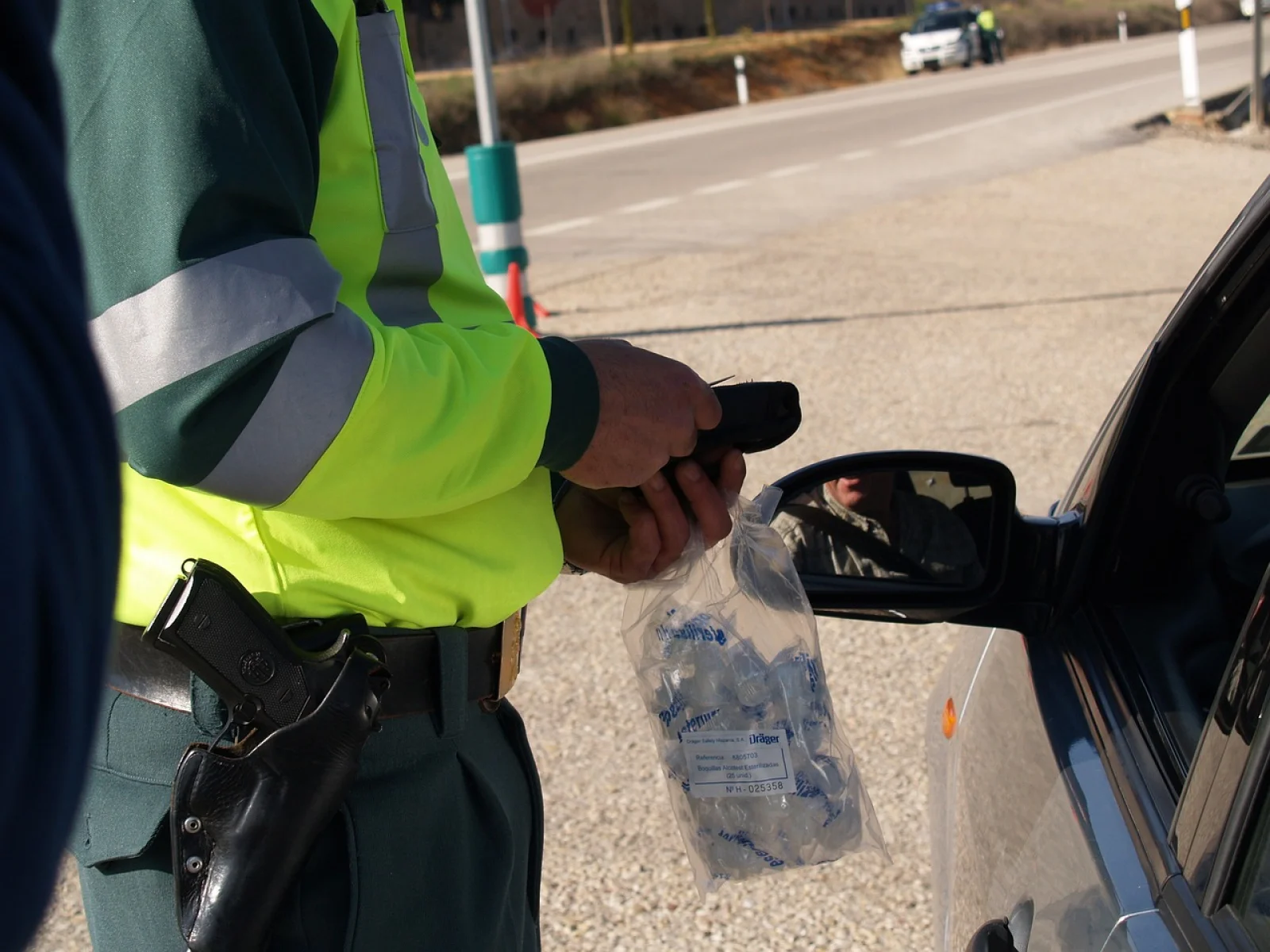
Photo by Rodrigo Morelos Oseguera on Pexels
On April 2, 2017, two officers, Atkins and Côté Lemieux, received a report about a drunk person driving an ATV in Val Bélair, Quebec. They were told the driver had parked and was leaving on foot. When they arrived at 1:35 p.m., they stopped the suspected person, Breault. They noticed he had bloodshot eyes and smelled of alcohol. He admitted to drinking a beer but denied driving the ATV. The officers confirmed with trail patrollers that Breault had been driving the vehicle. They did not have an ASD (Approved Screening Device, or breathalyzer) with them, so they called for one at 1:41 p.m. from a colleague in a nearby area.
Officer Atkins asked Breault to give a breath sample immediately, as allowed by law. They did not tell Breault that they did not have a breathalyzer on hand. Starting at 1:45 p.m., Breault refused three times to give a breath sample. He was warned of the consequences and he asked for a lawyer, but his request was denied.
Breault was arrested for refusing to give a breath sample. By 2:00 p.m., the breathalyzer still had not arrived, so the officers cancelled the request. They seized Breault's ATV and released him.
A Legal Battle Ensues: The Lower Courts Weigh In
Breault chose to challenge the actions of the officers in court. Here is how it unfolded:
| Court | Decision | Explanation |
|---|---|---|
| Municipal Court | Guilty |
Breault was initially found guilty of refusing to take a breathalyzer test under ss. 254(2), 254(5) and 255(1) Cr. C. Note: s. 254(2)(b) and s. 254(5) are substantially similar to the new scheme's s. 320.27(1)(b) and s. 320.15(1) respectively. |
| Quebec Court of Appeal | Not Guilty |
The Appeal Court found it unreasonable to penalize a driver for not immediately taking a test when the equipment for the test was not present. They decided that the police officer's request for a breath test was invalid because there was no breathalyzer at the scene. Therefore, they ruled that Breault was not guilty of refusing to comply with the request. The court overturned the previous verdict and ordered that Breault be cleared of the charges. |
The Crown's Appeal at the Supreme Court of Canada (SCC)
Unsatisfied with the Appeal Court's decision, the Crown chose to appeal to the Supreme Court of Canada (SCC). Breault, however, stood firm in his defense.
Here is a snapshot of the arguments presented by the parties:
| Party | Argument | Explanation |
|---|---|---|
| The Crown (Prosecution) | 1. Flexible Interpretation of "Forthwith" |
The prosecution suggested that the term "forthwith" (meaning immediately) should be interpreted flexibly to discourage drunk driving. A small delay, such as the time taken to bring a breathalyzer to the scene, should be allowed. They pointed out that officers do not always carry breathalyzers due to practical reasons. |
| The Crown (Prosecution) | 2. Breathalyzer Presence Not Crucial |
The prosecution argued that having a breathalyzer at the time of the request is not a crucial part of the offense under s. 254(5) Cr. C. in question. They suggested that if the law intended for a breathalyzer to be present, it would explicitly say so, as it does in the new s. 320.27(2) Cr. C. |
| Breault (Defendant) | Immediate Interpretation of "Forthwith" |
Breault argued that the term "forthwith" should mean "immediately," unless there are Unusual Circumstances. He reasoned that a driver being asked for a breath sample is detained without a lawyer, and thus the request for a breath sample should be immediate unless there are Unusual Circumstances. Since the prosecution did not show any Unusual Circumstances, he believed the officer's request was invalid and his acquittal should be upheld. |
Resolution of the Case
The crux of this case, and indeed its ultimate resolution, hinged on a pivotal question: Does the validity of a demand made by a peace officer under s. 254(2)(b) Cr. C. require that the officer have immediate access to an ASD at the time the demand is made?
Clarifying the Language: The Supreme Court's Interpretation
In this landmark case, the SCC eliminates any ambiguity surrounding the interpretation of the term "forthwith" as used in s. 254(2)(b) (Note: s. 254(2)(b) is substantially similar to s. 320.27(1)(b), Cr. C.). The following table outlines the SCC's authoritative interpretations of several key terms related to s. 254(2)(b).
| Term | SCC's Interpretation |
|---|---|
| Interpretation of "Forthwith" |
The term "forthwith" generally means "immediately" or "without delay". It does not mean "as soon as reasonably possible" or "as soon as practicable" or "time reasonably necessary." "Forthwith" is interpreted this way according to the text, context, and purpose of section 254(2)(b) Cr. C., except in Unusual Circumstances. "Forthwith" should be interpreted under the ordinary (grammatical) rule, but in the presence of Unusual Circumstances this interpretation may not be applied. |
| Requirement for Drivers |
Drivers detained under section 254(2)(b) Cr. C. must supply a breath sample to the officer immediately. The sample is to be used for analysis by a breathalyzer (ASD). |
| Definitions of "Provide" and "Forthwith" |
"Provide" means to supply something to someone. "Forthwith" means immediately or without delay. (For this, the SCC referred to the Canadian Oxford Dictionary (2nd ed. 2004), p. 1245 for "Provide"; Canadian Oxford Dictionary, p. 585 for "Forthwith"; Woods, at para. 13, and R. v. Grant, [1991] 3 S.C.R. 139, at p. 150 for both.) |
The Importance of Interpretation: Impact on Current Cases
The interpretation of s. 254(2)(b) is significant as it is substantially similar to s. 320.27(1)(b), Cr. C. This is detailed in the table below.
In December 2018, Parliament replaced sections 249 to 261 of the Criminal Code (termed the "Old Scheme") with sections 320.11 to 320.4 (known as the "New Scheme"). It is crucial to understand the similarities and disparities between these two legislative frameworks. Notably, while the old scheme uses the term "forthwith", the new scheme uses "immediately".
In this case, the Crown urged the SCC to interpret s. 254(2)(b) Cr. C. in light of the New Scheme enacted in 2018. However, the SCC declined to do so for several reasons, which are outlined in the following table.
| Provision | Old Scheme | New Scheme |
|---|---|---|
| Testing for the Presence of Alcohol/Drugs |
Under section 254(2)(b), if a peace officer has reasonable grounds to suspect that a person has alcohol in their body and that the person has operated a vehicle within the preceding three hours, the officer may require the person to provide a breath sample "forthwith" for analysis by a breathalyzer (ASD). |
Section 320.27(1)(b) contains a similar provision, but the term "immediately" is used instead of "forthwith". Original text written in the New Scheme: Testing for the presence of alcohol or drug — s. 320.27(1) If a peace officer has reasonable grounds to suspect that a person has alcohol or a drug in their body and that the person has, within the preceding three hours, operated a conveyance, the peace officer may, by demand, require the person to comply with the requirements of either or both of paragraphs (a) and (b) in the case of alcohol or with the requirements of either or both of paragraphs (a) and (c) in the case of a drug: (b) to immediately provide the samples of breath that, in the peace officer's opinion, are necessary to enable a proper analysis to be made by means of an approved screening device and to accompany the peace officer for that purpose; |
| Criminal Sanctions for Non-compliance |
Section 254(5) provides that anyone who fails or refuses to comply with such a demand, without a reasonable excuse, faces criminal sanctions. |
Section 320.15(1) contains a similar provision for criminal sanctions in case of non-compliance. Original text written in the New Scheme: Failure or refusal to comply with demand — s. 320.15(1) Everyone commits an offence who, knowing that a demand has been made, fails or refuses to comply, without reasonable excuse, with a demand made under section 320.27 or 320.28. |
| Random Screening | Not Available |
Section 320.27(2) introduces a new provision allowing peace officers, who have a breathalyzer (ASD) in their possession and who are acting within their legal powers, to randomly screen drivers even without reasonable grounds to suspect the presence of alcohol. This provision was not present in the old scheme. Original text written in the New Scheme: Mandatory Alcohol Screening — s. 320.27(2) If a peace officer has in his or her possession an approved screening device, the peace officer may, in the course of the lawful exercise of powers under an Act of Parliament or an Act of a provincial legislature or arising at common law, by demand, require the person who is operating a motor vehicle to immediately provide the samples of breath that, in the peace officer's opinion, are necessary to enable a proper analysis to be made by means of that device and to accompany the peace officer for that purpose. |
Understanding "Unusual Circumstances": The SCC's Guidelines
The Crown argued that a delay in providing a breath sample is reasonable and necessary since police officers might not always carry a breathalyzer, making immediate testing impossible. They also claimed that immediate testing is not a crucial requirement for an offense under s. 254(5) Cr. C.
However, the Supreme Court countered this by stating that the Crown had failed to demonstrate any "Unusual Circumstance" that would justify the absence of a breathalyzer at the scene, thereby allowing a flexible interpretation of "immediate" testing. The Court also pointed out that the Crown could not explain why the officers involved did not have a breathalyzer with them at the time.
This case brings us to a critical interpretation by the Supreme Court of Canada on the concept of "Unusual Circumstances" in relation to the use of a breathalyzer under s. 254(2)(b) Cr. C. This interpretation is crucial as it provides law enforcement officers with a framework to justify any delay in breath testing, helping to establish criminal liability for drunk driving. More details on the Court's guidelines regarding "Unusual Circumstances" appear below.
Who Must Prove Unusual Circumstances?
According to the SCC, the responsibility of proving the existence of Unusual Circumstances (that justify a delay in breath testing) rests on the Crown. It is their duty to establish any atypical situation during the ASD's use.
Identifying Unusual Circumstances
The identification of an Unusual Circumstance should be made in light of the text of the statutory provision. Courts are advised not to unduly stretch the ordinary meaning of "forthwith." In other words, these Unusual Circumstances must be evaluated based on the exact wording of the law. The courts should not stretch the meaning of "forthwith".
Limited Public Funding and Unusual Circumstances
A lack of sufficient public funding to equip police forces with ASDs is not an Unusual Circumstance. Even though the need for more public funding to supply ASDs might be a reality, budgetary considerations do not justify a flexible interpretation of the immediacy requirement. Limited budget allocation is a daily reality for any government and does not constitute an exceptional situation.
Absence of a Breathalyzer as an Unusual Circumstance
The simple absence of an ASD at the scene at the time a breath sample is requested is not considered an Unusual Circumstance. This means that not having an ASD available when the breath sample is required does not automatically constitute an exceptional situation.
Understanding the Validity of a Breath Sample Demand: The SCC's Stance
The Supreme Court of Canada (SCC) rejected the Crown's argument that a driver cannot rely on the absence of an ASD to justify refusal. That argument suggests that the driver would be unaware of the ASD's absence during the police stop. However, the SCC states that accepting this argument could inadvertently encourage police officers to be non-transparent. Typically, when officers stop a driver, they alone know whether they possess an ASD. This would allow them to arbitrarily validate an otherwise invalid demand if the driver was not informed about the absence of an ASD at the scene.
Although a demand for a breath sample is critical in law enforcement for suspected drunk drivers, it must meet the following criteria to be considered valid:
| Aspect | Sub-Aspect | Explanation |
|---|---|---|
| Validity of Demand | Immediate Demand |
The demand for a breath sample must be immediate. If there is no ASD available at the time, the demand is not valid. The key point here is that it is unfair to penalize someone for not complying with a demand when compliance was impossible due to the lack of an ASD at the scene. |
| Validity of Demand | Conditionality |
A demand cannot be both valid and invalid at the same time. The validity of the demand should not depend on how long it takes to get an ASD. |
| Driver's Understanding | Knowledge of Validity |
Drivers must know whether the demand for a breath sample is valid. They also need to know whether refusing to comply could lead to criminal charges. They cannot be held criminally responsible for refusing to give a sample if there is no ASD to comply with. |
| Legal Counsel | Need for Counsel |
If an Approved Screening Device (ASD) is not available at the scene, a driver cannot be expected to comply with the demand (a request made by a police officer) to provide a breath sample "in advance". This is because they cannot consult with a lawyer to understand their rights and obligations. Without legal advice, a driver also cannot correctly assess when a delay in the arrival of an ASD justifies their refusal to comply with the demand. Essentially, if a driver does not have access to legal counsel, they should not be expected to agree to provide a breath sample "later". The more the term "forthwith" is interpreted flexibly, the more necessary it becomes for drivers to have legal counsel. This is why we need to be cautious about an "Unusual Circumstance" that allows a flexible interpretation of "forthwith". Remember: the term "forthwith" implicitly restricts the right to counsel (as guaranteed by s. 10(b) of the Charter), so the driver may not have the chance to consult a lawyer beforehand. This restriction is justified as the detention is typically very short and the law aims to combat impaired driving. |
| Alternatives for Police Officers Without an ASD | Coordination Tests |
Police officers are not powerless even if they do not have an ASD while stopping a suspected drunk driver. They can ask the driver to perform coordination tests, as allowed by s. 320.27(1)(a) Cr. C. (like the old provision in the Cr. C.). |
| Alternatives for Police Officers Without an ASD | Common Law Powers |
Police officers have the authority to check sobriety under common law. When necessary and reasonable, they can question a lawfully stopped driver about prior alcohol consumption or ask them to perform physical tests not specified in the Criminal Code. |
| Transparency Requirement | Officer Transparency |
Officers must be transparent about whether or not they have an ASD. The court rejects the argument that drivers cannot refuse to give a sample if they are not aware of the absence of an ASD. |
The Supreme Court of Canada's Ruling on the Crown's Appeal
The Supreme Court of Canada (SCC) dismissed the Crown's appeal because the Crown failed to demonstrate any Unusual Circumstance that would justify the absence of an Approved Screening Device (ASD) at the scene. The Crown could not provide a valid reason for why Constables Atkins and Côté Lemieux did not have an ASD with them. This lack of explanation affected the interpretation of the requirement for immediate testing.
The SCC says that, due to these factors, the demand made by Constable Atkins was deemed invalid. Therefore, Breault's refusal to comply with the demand could not be considered a criminal act. As a result, the acquittal given by the Quebec Court of Appeal was upheld. The SCC agreed that Breault had not committed a criminal offense by refusing to provide a breath sample.